

MCQs on Lumps

Written by Dr. Andrew McAllister
(MBBS, FRACS) – Surgeon

Question 1

A 38-year-old man presents with a slowly enlarging lump on the dorsal aspect of his right wrist as shown in the picture. He first noticed it 6 months ago. It is generally painless but becomes more noticeable after typing or lifting weights. On examination, there is a soft, smooth, fluctuant swelling over the extensor aspect of the wrist that transilluminates. It is non-tender and not attached to overlying skin or underlying bone. There is no history of trauma or systemic symptoms.
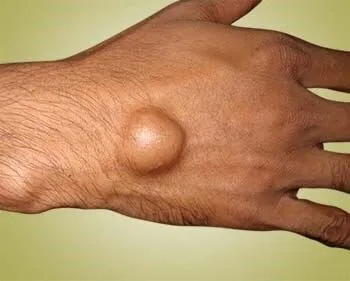
What is the most likely diagnosis?

A) Lipoma
B) Ganglion cyst
C) Synovial sarcoma
D) Rheumatoid nodule
E) Epidermoid cyst

Correct Answer: B) Ganglion cyst

Explanation:

The features described are typical of a ganglion cyst, which is the most common soft tissue lump in the hand and wrist region. These cysts arise from a joint capsule or tendon sheath and are filled with gelatinous fluid. They are usually painless, fluctuant, smooth, and often transilluminate. The dorsal wrist is the most frequent location.

A lipoma would be soft but not fluctuant or transilluminant, and it rarely occurs over the wrist joint.
Synovial sarcoma is rare, firm, and may present with rapid growth and associated pain.
Rheumatoid nodules are seen in patients with rheumatoid arthritis and are firm, non-fluctuant.
Epidermoid cysts usually occur on the face, scalp, or trunk, and they tend to have a punctum with no transillumination.

Management of ganglion cysts is typically conservative, but aspiration or surgical excision may be considered if the lesion is symptomatic or cosmetically concerning.

Question 2

Maria, a 45-year-old woman, presents with a painless, slowly growing lump on her left shoulder as shown in the below picture. She first noticed it about 1 year ago. On examination, the lump is soft, mobile, and well-circumscribed beneath the skin. It is not tender, and the overlying skin is normal. There are no signs of inflammation or neurovascular compromise.
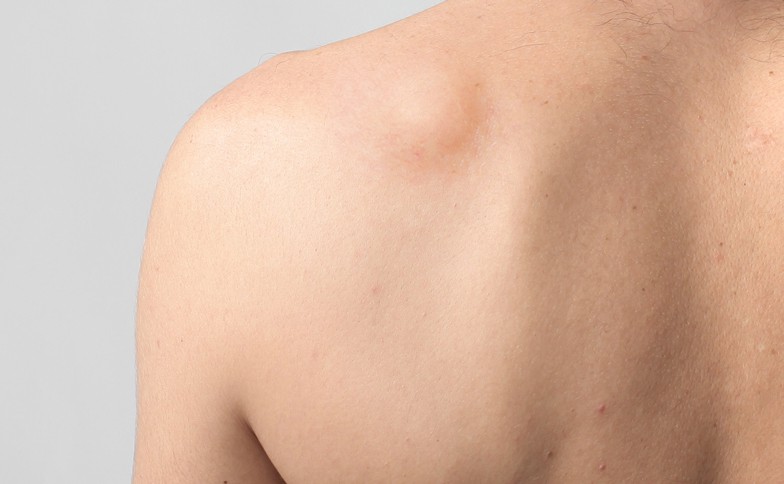
What is the most likely diagnosis?

A) Lipoma
B) Sebaceous cyst
C) Dermatofibroma
D) Sarcoma
E) Abscess

Correct Answer: A) Lipoma

Explanation:

A lipoma is a benign tumor composed of mature adipose tissue and is one of the most common soft tissue lumps encountered in clinical practice. It typically presents as a soft, mobile, painless, slow-growing subcutaneous mass. Lipomas are usually well-defined, and the skin overlying the lump is normal without signs of inflammation.

  • A sebaceous cyst (epidermoid cyst) is usually firmer, may have a central punctum, and can become inflamed or infected.
  • A dermatofibroma is a small, firm, hyperpigmented nodule, often found on limbs.
  • Sarcomas tend to be firm, fixed, and may grow rapidly with possible associated symptoms like pain or neurological deficits.
  • An abscess would present with signs of infection such as redness, warmth, tenderness, and possible systemic symptoms.

Most lipomas require no treatment unless they cause symptoms or cosmetic concerns, in which case surgical excision is the management of choice.

Question 3

James, a 30-year-old man, presents with a slowly enlarging lump on the lateral side of his neck as shown in the below picture. He noticed it 4 months ago. The lump is painless but occasionally causes mild discomfort when turning his head. On examination, the swelling is soft, fluctuant, and located just anterior to the sternocleidomastoid muscle. It moves slightly on swallowing but does not move with tongue protrusion. There is no overlying skin redness or warmth.
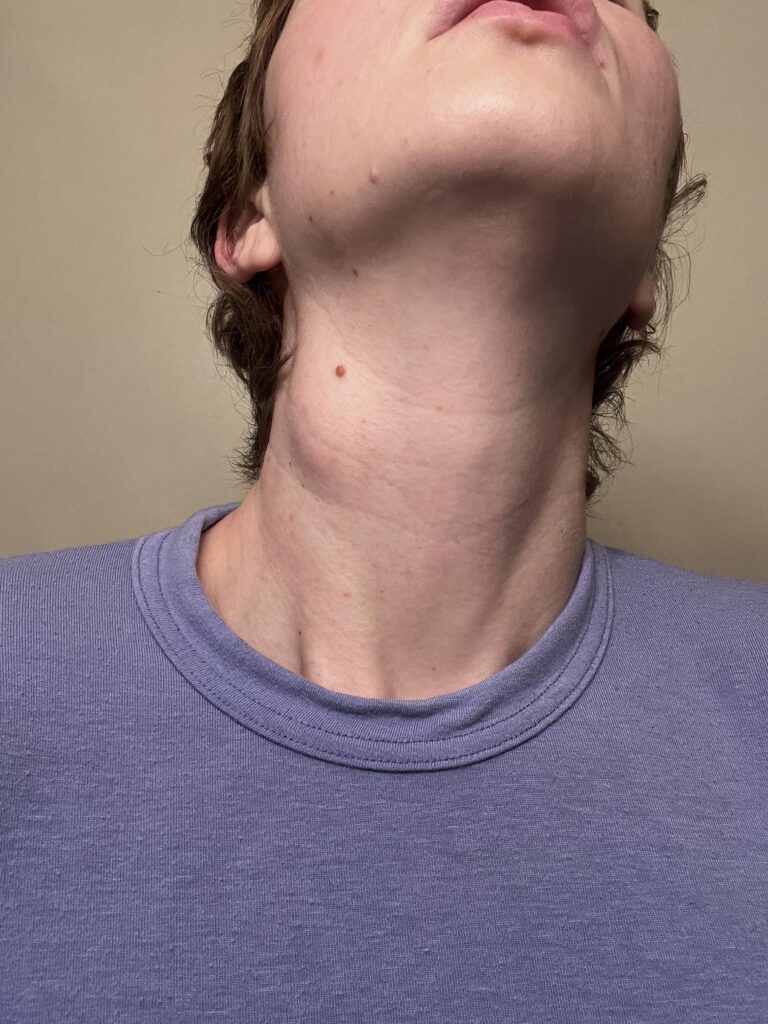
What is the most likely diagnosis?

A) Thyroglossal cyst
B) Branchial cleft cyst
C) Lymphadenopathy
D) Lipoma
E) Abscess

Explanation:

A branchial cleft cyst is a congenital epithelial cyst that presents as a soft, fluctuant, painless lateral neck swelling, typically located anterior to the sternocleidomastoid muscle. It is common in young adults and may cause mild discomfort due to local pressure.

  • A thyroglossal cyst is usually a midline neck swelling that moves with swallowing and tongue protrusion.
  • Lymphadenopathy often presents as multiple tender or firm nodes, sometimes associated with infection or malignancy.
  • A lipoma is typically soft and mobile but usually located in the subcutaneous tissues and less likely to be fluctuant.
  • An abscess would present with signs of inflammation like redness, warmth, tenderness, and systemic symptoms.

Definitive management involves surgical excision to prevent recurrent infections.

8. General Surgery Module