

MCQs on Subfertility

Written by Dr. Priya Menon (MBBS, FRANZCOG) – Obstetrician and Gynaecologist

Question 1

A 29-year-old woman named Emily has been trying to conceive with her partner for 10 months without success. She has regular menstrual cycles and no significant medical history. Her partner is healthy with no known medical issues. Both have had no prior pregnancies.

Which of the following best defines subfertility?

A) Failure to conceive after 6 months of regular unprotected intercourse
B) Failure to conceive after 12 months of regular unprotected intercourse
C) Failure to conceive after 24 months of regular unprotected intercourse
D) Absence of menstruation preventing conception
E) Inability to conceive despite multiple assisted reproductive techniques

Correct Answer: B) Failure to conceive after 12 months of regular unprotected intercourse

Subfertility is typically defined as the failure to conceive after 12 months of regular unprotected sexual intercourse in women under the age of 35. For women over 35 years, evaluation is often considered earlier, typically after 6 months, due to declining fertility with age.

It is important to distinguish subfertility from infertility, which can refer to a complete inability to conceive or carry a pregnancy to live birth, although in many contexts the terms are used interchangeably.

In Emily’s case, as she has been trying for 10 months and is under 35, she is approaching the timeframe where investigation is reasonable. Early evaluation is considered if additional risk factors are present, such as irregular cycles or known reproductive issues.

  • Option A (6 months) is too early for routine evaluation in women under 35.
  • Option C (24 months) is longer than the standard period defining subfertility.
  • Option D refers to amenorrhoea, which is a cause of infertility but not a definition.
  • Option E refers to treatment failure, not initial subfertility.

Question 2

A 26-year-old woman named Sarah presents with irregular menstrual periods occurring every 2 to 3 months for the past year. She reports difficulty conceiving and has noticed increased facial hair growth and occasional acne. On examination, she has mild hirsutism and a BMI of 32 kg/m². Pelvic ultrasound shows multiple small ovarian cysts bilaterally.

Which of the following is the most likely diagnosis?

A) Premature ovarian insufficiency
B) Polycystic ovarian syndrome (PCOS)
C) Hypothalamic amenorrhoea
D) Endometriosis
E) Thyroid dysfunction

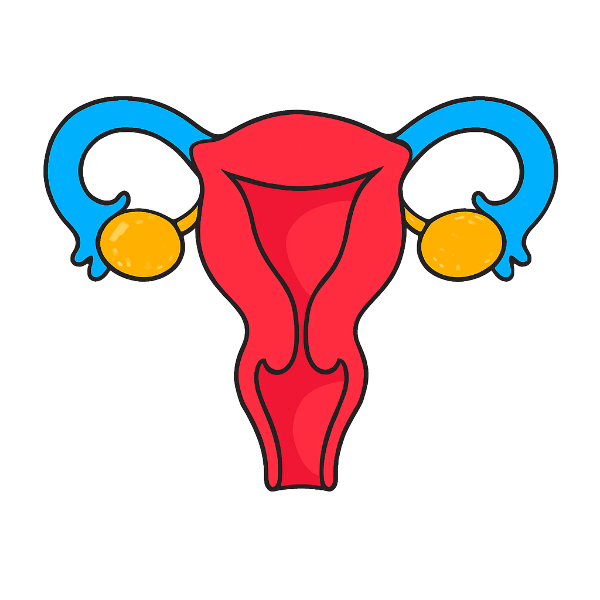
Correct Answer: B) Polycystic ovarian syndrome (PCOS)

PCOS is a common cause of ovulatory dysfunction and subfertility in women of reproductive age in Australia. It is characterised by a combination of oligo- or anovulation (irregular or absent periods), clinical or biochemical signs of hyperandrogenism (such as hirsutism and acne), and polycystic ovarian morphology on ultrasound.

The diagnosis is typically based on the Rotterdam criteria, which require two of the following three features: irregular ovulation, hyperandrogenism, and polycystic ovaries, after excluding other causes.

PCOS is associated with insulin resistance, obesity, and increased risk of metabolic syndrome. Management focuses on lifestyle modification, weight loss, and ovulation induction for fertility.

  • Premature ovarian insufficiency (Option A) typically presents with amenorrhoea and elevated gonadotropins, not with hyperandrogenism.
  • Hypothalamic amenorrhoea (Option C) is associated with low body weight or stress and low gonadotropins.
  • Endometriosis (Option D) causes pelvic pain and infertility but not hyperandrogenism or polycystic ovaries.
  • Thyroid dysfunction (Option E) can cause menstrual irregularities but not the full PCOS phenotype.

Question 3

A 26-year-old woman named Sarah presents to her GP with concerns about irregular menstrual periods over the past 12 months. Her cycles occur every 2 to 3 months, and she has been trying unsuccessfully to conceive for 8 months. She also reports new facial hair growth on her upper lip and chin, and occasional worsening of acne. She denies significant weight changes but has a family history of type 2 diabetes mellitus. On examination, Sarah’s BMI is 32 kg/m², and she has mild hirsutism with coarse terminal hairs on her face. Pelvic ultrasound reveals bilaterally enlarged ovaries with multiple small peripheral follicles, consistent with polycystic ovarian morphology.

Which of the following is the most likely diagnosis?

A) Premature ovarian insufficiency
B) Polycystic ovarian syndrome (PCOS)
C) Hypothalamic amenorrhoea
D) Endometriosis
E) Thyroid dysfunction

Correct Answer: B) Polycystic ovarian syndrome (PCOS)

Polycystic ovarian syndrome is a leading cause of ovulatory dysfunction and subfertility in women of reproductive age in Australia. It is characterised by a combination of oligo- or anovulation (manifested by irregular or absent periods), clinical or biochemical signs of hyperandrogenism such as hirsutism and acne, and polycystic ovarian morphology on ultrasound. The Rotterdam criteria require two of these three features for diagnosis, after excluding other causes.

PCOS is also closely linked with insulin resistance, obesity, and an increased risk of metabolic syndrome, type 2 diabetes, and cardiovascular disease. Lifestyle interventions including diet, exercise, and weight management are first-line therapies. For women seeking fertility, ovulation induction with medications such as clomiphene citrate or letrozole is commonly used.

  • Premature ovarian insufficiency (Option A) usually presents with amenorrhoea, menopausal symptoms, and elevated gonadotropins, and does not feature hyperandrogenism.
  • Hypothalamic amenorrhoea (Option C) often occurs in underweight women or those with significant stress, and is associated with low gonadotropin levels.
  • Endometriosis (Option D) is primarily a cause of pelvic pain and infertility but does not cause hyperandrogenism or polycystic ovaries on imaging.
  • Thyroid dysfunction (Option E) can disrupt menstrual cycles but does not cause the typical PCOS features.

14. Gynecology Module