
Abnormal Uterine Bleeding

Written by Dr. Priya Menon (MBBS, FRANZCOG) – Obstetrician and Gynaecologist

Question 1

A 29-year-old woman presents to your practice with complaints of annoying pain and cramping with her periods as well as slight increase in her menstrual flow. She has had this problem since she started menstruating and investigations revealed no apparent cause for the presentation. Recently, she was advised to take combined oral contraceptives (COCs) for both contraception and treatment of her dysmenorrhea and was started on microgynon 30 mcg. Her dysmenorrhea, however, persists. Which one of the following would be the next best step in management?

A) Start her on NSAIDs during her menses.
B) Increase the dose of estrogen.
C) Decrease the dose of estrogen.
D) Prescribe progestogen-only pills (POP).
E) Advise Mirena®.

Correct Answer: A) Start her on NSAIDs during her menses.

Explanation:
Based on the history and the normal investigation, this woman has primary dysmenorrhea. The characteristic symptoms include lower abdominal or pelvic pain, often radiating to the back or legs, with onset typically 6 to 12 months after menarche. Pain usually lasts 8 to 72 hours and occurs at the onset of menstrual flow. Associated symptoms can include low back pain, headache, diarrhea, fatigue, nausea, or vomiting.

Before diagnosing primary dysmenorrhea, other causes such as uterine leiomyoma or endometriosis must be excluded.

A Cochrane review of 73 randomized controlled trials provides strong evidence supporting nonsteroidal anti-inflammatory drugs (NSAIDs) as the first-line treatment for primary dysmenorrhea. NSAIDs should ideally be started 1 to 2 days before the anticipated onset of menses and continued for 2 to 3 days into menstruation.

Hormonal contraceptives (oral, intravaginal, intrauterine) are often used, especially when contraception is also desired, but the evidence for their effectiveness in treating dysmenorrhea is limited. Therefore, in a patient who has not responded to COCs, adding NSAIDs is the most appropriate next step.

Question 2

A 25-year-old woman, on oral contraception pills, presents to your office because she is concerned about 3 episodes of painless vaginal bleeding in the past week. She has had regular cervical screening tests with normal results to date, with the last one taken 12 months ago. Which one of the following is the most likely cause of her postcoital bleeding?

A) Chlamydia infection
B) Cervical cancer
C) Endometrial cancer
D) A cervical polyp
E) Cervical ectropion

Correct Answer: E) Cervical ectropion.

Cervical ectropion occurs when the columnar epithelium from the endocervical canal everts and becomes exposed on the ectocervix, making it more prone to trauma and bleeding during intercourse. It is a benign and common condition in young women, especially those on oral contraceptive pills, due to estrogen stimulation.

While chlamydia cervicitis (Option A) can also cause postcoital bleeding, it is usually associated with other symptoms like discharge or pelvic discomfort, which are absent in this case.
Cervical polyps (Option D) may cause irregular bleeding but are more common in women over 30-40 years.
Cervical cancer (Option B) and endometrial cancer (Option C) are unlikely in a 25-year-old with normal screening history.

Thus, in this young woman with recent painless postcoital bleeding, no other symptoms, and normal cervical cytology, cervical ectropion is the most likely cause.

Question 3

A 31-year-old woman presents with complaints of 10 kg weight loss and heavy periods for the past six months. However, her periods were and still are regular, occurring at intervals of 32 days, lasting for five days with no increased pain or discomfort. The number of pads she uses indicates blood loss of more than 80 mL per cycle. She has no known medical condition. The rest of the physical examination, including pelvic exam, is inconclusive. An office urine pregnancy test is negative. Which one of the following would be the most appropriate investigation to consider first?

A) Transvaginal ultrasonography.
B) Abdominal ultrasonography.
C) Thyroid stimulating hormone (TSH) level.
D) Prolactin level.
E) Follicle stimulating hormone (FSH) level.

Correct Answer: A) Transvaginal ultrasonography.

Explanation:
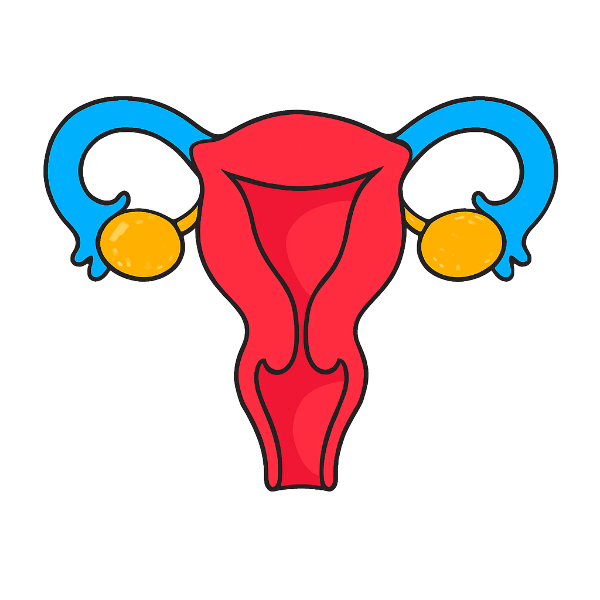
This woman presents with regular but heavy menstrual bleeding, classified as menorrhagia, a type of abnormal uterine bleeding (AUB) with ovulatory pattern. Menorrhagia is defined as blood loss >80 mL per cycle and/or bleeding lasting more than 7 days.

In ovulatory AUB, structural causes are most likely—leiomyomas (fibroids), adenomyosis, polyps, or endometrial pathology. The first-line investigation is transvaginal ultrasonography (TVUS), which allows detailed assessment of the uterine lining and structure, and helps identify endometrial abnormalities or intrauterine masses.

Though the patient reports weight loss, which may raise concern for hyperthyroidism or malignancy, TVUS is still the preferred initial investigation because it helps assess endometrial thickness and screen for endometrial cancer, which is a more serious concern in AUB cases with systemic symptoms like weight loss.

Thyroid function tests (TSH) may be warranted later, but hyperthyroidism is more commonly associated with oligomenorrhea or amenorrhea, not menorrhagia.

Hormonal assays such as FSH and prolactin are useful in anovulatory bleeding, but this case clearly reflects an ovulatory pattern.

Abdominal ultrasonography is less sensitive than TVUS for uterine pathology and is usually reserved for patients who cannot tolerate transvaginal scanning.

Previous Next

14. Gynecology Module