
MCQs on Breast

Written by Dr. James Whitfield (MBBS, FRACGP) – General Practitioner

Question 1

Ethan is a 16-year-old boy who has presented to your clinic with breast enlargement as shown in the following photograph. The breast enlargement was first noticed four months ago as a small swelling under the nipple that has enlarged gradually in the next two months and has remained the same size since then. He has been your patient since the age of nine years with the complaint of asthma that is currently controlled on inhaled salbutamol on an as-needed basis and fluticasone three times daily. He takes no other medications. Physical examination reveals mild tenderness of breasts. The rest of the examination is unremarkable. Which one of the following is the most appropriate management for him?
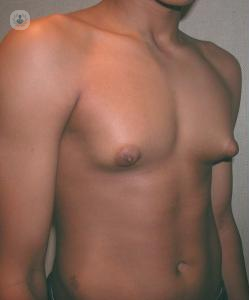
A) Changing his asthma medication.
B) Reassurance.
C) Mastectomy.
D) Testosterone injection.
E) Ultrasound of the testes.

Correct Answer: B) Reassurance.

Explanation:
The most likely diagnosis is pubertal gynecomastia, which is common during adolescence, particularly between the ages of 13 to 17. It is often bilateral, rubbery, subareolar, and may be mildly tender, as seen in Ethan’s case. The cause is believed to be due to a temporary imbalance between estrogen and androgen levels during puberty.

This condition is physiological and usually resolves spontaneously within 6 months to 2 years. In Ethan’s case, there is no evidence of pathological causes such as medication side effects, testicular mass, or systemic illness.

  • Option A (Changing asthma medication): Salbutamol and fluticasone are not known to cause gynecomastia, so changing medication is unnecessary.
  • Option C (Mastectomy): Surgical treatment is only for persistent or psychologically distressing cases, typically after 2 years or in older adolescents/adults.
  • Option D (Testosterone injection): This is indicated only in cases of confirmed hypogonadism, which Ethan does not have.
  • Option E (Ultrasound of the testes): Not required unless there are abnormal scrotal findings or signs suggesting a testicular tumor.

The most appropriate management is to explain the condition and provide reassurance.

Question 2

Adrian is a 17-year-old boy, who has presented to your GP clinic with complaint of painful breast enlargement for the past three months as shown in the following photograph. He has asthma that is well-controlled on inhaled salbutamol and beclomethasone. He has no other medical condition, otherwise takes no other medications, and enjoys a good health. He plays football in his school team. He denies using illicit drugs. Physical examination shows unilateral right breast enlargement starting from the nipple and spreading concentrically. Touching the breast causes mild pain. There is no discharge or lymphadenopathy. The rest of the examination including testicular examination is unremarkable. Which one of the following is the most likely cause of this presentation?

A) Inhaled salbutamol.
B) Inhaled beclomethasone.
C) Misuse of anabolic steroids.
D) Physiologic gynecomastia of adolescents.
E) A testicular tumor.

Correct Answer: C) Misuse of anabolic steroids.

Explanation:
Adrian’s case is best explained by pathologic gynecomastia, and the most likely etiology is misuse of anabolic steroids, especially considering his age, athletic background, and the unilateral macromastia (>5 cm breast enlargement).

Although Adrian denies drug use, athletes and adolescents involved in competitive sports such as football are at increased risk of experimenting with performance-enhancing substances, including anabolic steroids, which are a well-known cause of gynecomastia due to hormonal imbalance (increased estrogenic activity relative to androgens).

  • Option A (Inhaled salbutamol) and Option B (Inhaled beclomethasone) are not associated with gynecomastia.
  • Option D (Physiologic gynecomastia of adolescents) typically resolves by age 17, and Adrian’s macromastia and persistent pain make this diagnosis unlikely.
  • Option E (A testicular tumor) is a possible cause of gynecomastia but less likely here due to normal testicular examination and absence of suggestive symptoms.

Hence, anabolic steroid misuse is the most probable cause in this context.

Question 3

A 62-year-old man has bilateral breast enlargement as shown in the accompanying photograph. His medical history includes hypertension, rheumatoid arthritis (RA), and gastroesophageal reflux disease (GERD). He takes nifedipine and hydrochlorothiazide for hypertension, ibuprofen for the RA, and ranitidine for the reflux. He is a heavy alcohol drinker and takes 8–12 standard units of alcohol every day. He also smokes two packs of cigarettes per day. On examination, he has a blood pressure of 145/98 mmHg, pulse rate of 92 bpm and respiratory rate of 18 breaths per minute. There is bilateral breast enlargement consistent with gynecomastia. In addition, he has bilateral parotid enlargement. The abdomen is soft and non-tender with no ascites or organomegaly.

Which one of the following is most likely to have caused this presentation?

A) Smoking
B) Ibuprofen
C) Ranitidine
D) Nifedipine
E) Alcoholic liver disease

Correct Answer: E) Alcoholic liver disease.

Explanation:
The clinical presentation of bilateral gynecomastia and bilateral parotid enlargement in a male patient who is a heavy alcohol user is highly suggestive of alcoholic liver disease. While nifedipine (a calcium channel blocker) and ranitidine (an H2-blocker) have some evidence linking them to gynecomastia, the association is much weaker compared to alcohol-related liver disease. Ibuprofen and smoking have no known strong association with gynecomastia.

Alcoholic liver disease leads to gynecomastia due to altered estrogen metabolism, increased levels of sex hormone-binding globulin, and reduced hepatic clearance of estrogens. In addition, parotid gland enlargement is a common finding in chronic alcohol users due to fatty infiltration and sialadenosis. Though there are no signs of advanced liver disease (like ascites or jaundice), early hepatic dysfunction can still produce hormonal imbalances that result in this presentation.

Given the chronic alcohol use, supportive clinical features, and lack of better alternative causes, alcoholic liver disease is the most likely cause in this patient.

5. Endocrine Module